Showing posts with label music. Show all posts

August 3, 2010

Learn more about Brazilian Music and Culture: Choro

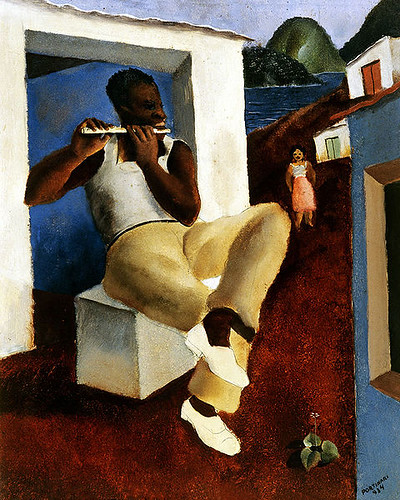
Pintura por Cândido Portinari (domínio público)

 
Most of my students have heard of samba and bossa-nova*... but it is much harder to find those who know what Choro ou Chorinho is. Well, if you are like them, you need no longer miss out on this beautiful style of music.

Choro means 'cry'. It is the noun as in "um choro triste" (a sad cry) (so the first 'o' is pronounced like an 'ô', not like an 'ó'... as opposed to the verb spelled the same way, but pronounced with an ó) ... but the rhythm is most often very happy and upbeat (there seem to be a couple of different ideas on why that is the name, and since I don't know the answer, I won't go it to it). Here is a Brazilian advertisement that makes a joke based on the name of the style, where you can also hear an example of chorinho (don't worry if you don't get the joke!):


Chorinho is considered the first popular urban style of music created in Brazil (originating in the 19th century) and it is stil played in Brazil today.

If you are in New York City,  you can go to a Choro concert right here in the city! The Choro Ensemble is playing at Zinc Bar tomorrow night (04 de Agosto)!

To learn a little bit more about chorinho, read one of these articles:
To learn about the instruments used in chorinho, see my other post with a vocabulary lesson about musical instruments in Portuguese.

To enjoy the music (and hear a little bit of Portuguese), you can watch the documentary "The sound of Rio: Brasileirinho"(imdb). If you are an advanced student, it may be good listening practice. You may try it even if you are a beginner, as there is a lot of music and not too much talking anyway:


*If you are an upper-intermediate or advanced student and really love Bossa nova, you should check this book out!

Hope to see you at Zinc bar!

Vocabulary lesson: Instrumentos Musicais em Português

Bom dia! I was preparing a post about chorinho and thought that it would be a good idea to introduce you to the vocabulary of musical instruments in Portuguese first.  I also have a couple of very nice students who are musicians who may find this useful.

If you are a beginner, don't worry too much if you don't understand a lot of the words in the readings and video, just get as much as you can. If you are an intermediate student, this may be perfect for you. If you are an advanced speaker of Portuguese, you may still learn a new word or two... and I follow the links to some readings that are more advanced.

Parte I: Os Instrumentos Musicais

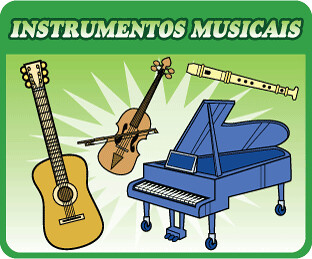
Aqui estão alguns instrumentos músicais:

 
 violão, violino, piano e flauta

Esses intrumentos são parecidos (similares), mas são diferentes:


Note que a guitarra é elétrica e o violão geralmente é acústico. O cavaquinho é bem pequenininho.

Aqui estão outros instrumentos:

trombone                       saxofone                       clarineta


                                     gaita

bateria

 
                 pandeiro                                                                                 sanfona


O pandeiro é muito importante no samba e a sanfona é muito importante no forró.
O Slash (dos Guns and Roses) toca guitarra e o João Gilberto toca violão.
Você sabia que o Woody Allen toca clarineta?


Atividades:
Responda as perguntas (answer whichever ones you can):
a. Você toca algum instrumento musical?
b. Você tem algum instrumento musical?
c. Qual é o seu instrumento favorito?
d. Qual dos instrumentos acima é maior (mais pesado)?
e. Qual dos instrumentos acima é menor (mais leve)?
f. Qual instrumento o Kenny G. toca?
g. Dê o nome de um instrumento que é importante no samba.
h. Dê o nome de um instrumento que é importante no jazz.
i. Dê o nome de um instrumento que é importante no rock.
j. Dê o nome de um instrumento que é importante na bossa nova.

Jogue esse jogo sobre instrumentos. Fale o nome dos instrumentos em voz alta.

Opcional: leia esse artigo sobre instrumentos importantes na música brasileira (if you can, don't worry if don't understand everything. Beginners may just read the name of the instruments matched with the drawings) .

Desafio (challenge): play a game of forca (hangman), where all words are instrumentos músicais. (Don't worry if you don't know all of the words in the game: I and a lot of Brazilians wouldn't know all those words ourselves!)


PARTE II: Os instrumentos do Choro

Essa parte é sobre os instrumentos importantes no choro. Para saber um pouco sobre o choro, veja as links no meu artigo sobre o choro.

Atividades:

Leia o artigo Os instrumentos do choro (if you can, don't worry if don't understand everything. Beginners may just read the name of the instruments matched with the drawings).

Advanced students: leia este artigo.

Conecte o nome do instrument com a foto:

Exemplo:
Violão de seis cordas: _1__

cavaquinho: ___
bandolim:___
violão:___
flauta: ___
pandeiro ___


O seguinte vídeo sobre um instrumento importante no choro, no samba e no pagode. Adivinha qual é o instrumento!

Aqui está o vídeo, com perguntas para responder (the host of the quiz doesn't support Portuguese characters, so there are no acentos in the quiz :-( ). Click here to see the complete test.


(If you are a my student in a class or private lessons, ask me for a code to share your results or grab it from our private wiki).

Gente! O Eduardo Sant'Anna não é incrível?

Opcional: leia as partes do violão e escute o vídeo de novo. Você consegue reconhecer alguma parte?


 Now that you know the names of the instruments used in chorinho,  enjoy some of the music!
July 1, 2010

Brazilian Music at MoMA Nights thoughtout July

One more for those of your learning Portuguese in NYC: MoMA Nights will be featuring a bunch of Brazilian artists this month! The events are being kicked off right now (as in the time of writing) by the awesome Nation Beat (I only heard about it now and have to head off to teach :-() and will continue through to the end of July. You can see the events scheduled here.

February 23, 2010

80's Portuguese concert in NYC again!

Quick note for those in New York and interested in a pop-cultural experience. Gig Brazil is guys are having another 80's Brazilian Rock concert this Saturday at Sullivan Hall. I am not sure I'll be able to go this time (bummer), but last time I had such a great time! Check it out if you are up to some very different Portuguese practice this Saturday night!

February 22, 2010

Expand your Portuguese through reading and music: A great book for advanced speakers

I am always on the look out for books for my advanced students that are interesting so that they can practice their reading. The only thing is that some books that I love and some of the classics can be very difficult to read for foreign language speakers and they end up giving up!* During my last trip to Brazil I found a great book for advanced learners called "Noites Tropicais", by the music journalist Nelson Motta.

The language in the book is really natural (more similar to spoken language than many books I find). As well as looking out for the abscence of language features that are mostly formal and looking for informal language while reading it (like "pulando feito pipoca"), I test drove the book by giving it to my husband (an advanced speaker) who could read it without too much trouble and really liked it!

The story is super-interesting if you like Brazilian music. The book tells the story of Brazilian music from João Gilberto until the 1990's, from a very personal perspective (the author was right in the middle of the music scene the whole time and was good friends with a lot of the musicians). Because of that, it mentions the story behind of a lot of the songs that we know and love. So you can spice up your reading by pausing to listen and have a good look at some of the songs mentioned in the book (learning through music can be very nice and break up your routine). [I have set up a Pandora station (free!) with songs *mostly* by the composers mentioned in the book. To access, click here (login required) or go to "create station" and start typing "Noites Tropicais", it should find the station and suggest it to you as you type it.]

You can see a good summary from the publisher here and a nice review here. These are in Portuguese, so if you can understand the gist of these articles well, you are in a great position to read the book... If you can't understand most of the summary and review, keep practicing (and following the blog :-)) and try again later.

As of right now, you can get the book from Amazon or you can get it through Atlântico Books, a boutique book importer which specializes on Portuguese books. There is also companion CD (or you can listen to the Pandora station, which is free :-)).

*I think is a great goal to be able to read the stuff with more complicated language (and worth it!), but I definitely don't think your first Portuguese book should be one of those (just like I don't think English learners should start by reading Shakespeare!). I recommend reading books with more current/ natural language first and then moving on to harder stuff later... even if your Portuguese is really good!

** This post is for my lovely student of the month, Thomas, who is going to read the book with me!

July 9, 2009

80's-90's Brazilian Rock Concert!

Ok, so I was planning to have a language/ non-event post next... but then I just found out about what looks like a very fun event for me and all NYC Portuguese students out there coming up this Saturday... so I had to post it!

It seems like this group is a very casual, non-pro group of Wall street Brazilian guys who decided to play gigs for fun... their wives are the back vocals and the a crowd is full of their friends.... sounds like an awesome garage band kind of vibe.

One very cool thing is that they play classic 80's-90's that most Brazilians the same age as your Portuguese teacher here just love.... All those who know me know that I love samba, bossa/ brazilian jazz and forró, but you can usually find that more easily (ainda bem!)... a band playing the fun 80's stuff is much harder to find! (Don't you love New York City?). So if you are really getting into the culture, this could be a great cultural experience (even if you end up finding out that it is not really your bossa-nova-ear's thing).

The concert is this Saturday at Sullivan Hall at 9:30 pm. Tickets are $10 and can be purchased in advance here. They say to arrive early because they are opening for another band (Shitty Shitty Jam Band, doesn't that sound like a night!).

For those advanced Portuguese learners, you can listen to this video about the band and see what you understand (I may post supporting learning notes/glossary later):


I am going and trying to drag some of my local students with me. Hope to see you there!

July 12, 2008

Learn by singing: Exercises for "Amanhã eu não vou trabalhar"

I have just posted the words of a música (this is how Brazilians say song) for you to practice your Portuguese by singing. Here are some exercises if you want to turn the song into a complete lesson that you can do without a teacher (note: start here and follow the instructions, then only go to the post after you are done).

Focus of the exercises: listening and practice conjugating verbs in first person (eu)

1. Get the song and open it in a different window.
You can purchase the song from itunes or listen to it from this somewhat strange video.

2. Listen to the song once or a couple times.
Advanced/ upper intermediate students: pay close attention to the words while you listen and then try to summarize what you understood: (a) Did you get a gist for what is the song about? Pretend you are explaining your guess to a friend, in Portuguese. (b) Can you remember any of the verses?

Upper beginners and intermediate learners: pay close attention to the words while you listen. (a) Did you recognize any words? Intermediate students: try to list 10 words you think you recognize and write them down, upper beginners: try for 5 words. (b) Can you guess what the song is about? (it is ok if it is wrong!)

Fresh beginners: Just listen to the song a couple of times and enjoy it. At least once, try and pay close attention to the singing, even if you don't understand (just to help you get used to the sounds of Portuguese). If you are adventurous, you can even try to imitate a little part of the song, just for fun... but don't worry too much.

3. Complete the orange part of the words below.
Feel free to skip this part if you are a fresh beginner and you don't know much about verbs yet. Just follow the conjugation instructions and fill in the orange blanks in a separate page or a print out of this post. (For example, if you see: Eu _________ [falar, eu, presente] Português. You write: falo in the blank space.)

Amanhã eu não vou trabalhar
_________ [Ficar - eu, pretérito perfeito] até tarde no samba
Não
________[poder - eu, presente] negar
E eu não _______[saber - eu, presente] o que eu vou _________
Só sei que ______________________
________[acordar - eu, presente] às cinco da manhã
e
_________[sair - eu, presente] sozinho
_________[Levantar, eu presente] antes mesmo do sol levantar
Demoro uma vida pra ____________

Começa o meu expediente, não boto uma fé

_________ [Tomar - eu/presente] um litro de ________
Pra ver se eu
__________[esquecer - eu, presente]
que a minha ________ já tá pra estourar

Eu ________[perder - eu/presente] o emprego,
mas sei que Amanhã eu não vou trabalhar

Amanhã eu não vou...

O samba tá bom demais

Pra ir embora, como é que faz

O chopp descendo, o couro comendo
E aquela nega não para de _____________

__________ pra mim
E a loura __________ que sim

___________ [se apaixonar, eu, preterito perfeito] mais de três vezes
Desde o começo da noite pra cá

Eu perco o juízo, e
________[dizer - eu, presente]:
Amanhã eu não vou trabalhar
.

Optional: you may now listen to the song again, paying attention to the parts you have completed.

3. Complete the remaining (green) blank spaces of the words above.
Upper beginners to advanced students: now listen to the song again. This time you want to fill out the green spaces. Don't worry if you don't get all of them.

4. See the full lyrics.

Check the full lyrics for the song here.

Optional exercises (if you haven't had enough already! :-))

Intermediate: (a) Can you summarize what the song is about now? (b) Find one or a couple of new words that you didn't know before and see if you can guess their meaning from context.

Advanced: (a) Have you had any experiences similar to the one described in this song? How was it? How would you tell a friend about that experience (in Portuguese).Did you learn a little Portuguese from the exercise? Good job! Now you can sing along in Portuguese!If you still want more, you can see a rough translation and some notes in this next post.

Well done! Now, you can see a rough translation of the song with notes on this post.

Learn by singing: "Amanhã eu não vou trabalhar"

Music can be a great tool to help you learn (see a short post in Portuguese, here): it can build up your vocabulary, it is fun and the rhythm may help you better remember what you learn. Here is a song for you to get started: "Amanhã eu não vou trabalhar", by Alexandre Grooves, with Seu Jorge. You can get it from itunes, msn music or listen to it from video.

[Note: if you want to make the most of this song by doing some exercises, go through this post before reading on]

Listen to the song and see the words for the song here. Here a free translation with some notes:

Amanhã eu não vou trabalhar Tomorrow I am not going to work
Fiquei até tarde no samba I stayed until late at the samba
Não posso negar I can't deny it
E eu não sei o que eu vou inventar I don't know what I am going to make up
Só sei que amanhã eu não vou trabalhar I just know that tomorrow I am not going to work
Acordo às cinco da manhã e saio sozinho I wake up at five in the morning and go out alone
Levanto antes mesmo do sol levantar I get up even before the sun rises
Demoro uma vida pra chegar I take a life[time] to arrive
Começa o meu expediente, não boto uma fé My work hours start, I can't believe it/ I have no faith on it
Tomo um litro de café I take a liter of coffee
Pra ver se eu esqueço que a minha cabeça já tá pra estourar To see if I forget that my head is already about to explode
Eu perco o emprego, I lose my job,
mas sei que amanhã eu não vou trabalhar but I know that tomorrow I am not going to work

O samba tá bom demais The samba is really good
Pra ir embora, como é que faz How can one do to leave?
O chopp descendo, o couro comendo The beer (draft beer) going down, the action going down*
E aquela nega não para de sambar and that girl/ black girl doesn't stop dancing samba
Olhando pra mim Looking at me
E a loura dizendo que sim and the blond saying yes
Já me apaixonei mais de três vezes I've already fallen in love more than three times
Desde o começo da noite pra cá Since the begining of the night until here
Eu perco o juízo, e digo: I lose my mind, and I say:
Amanhã eu não vou trabalhar. Tomorrow I am not going to work.

Expressions:
  • botar fé: literally, to put faith. It is a slang, popular with hip youngster, that means to believe in or have faith in something and somebody, e.g.: Boto fé que a Marina vai acabar ficando com o Alexandre. (I believe that Marina will end up hooking up with Alexandre)
  • Chopp: draft beer.
  • O couro comendo: I think the best translation, meaning wise, would be "the shit is going down", though in the Portuguese expression has no bad words in it.
  • nega: this slang term means black girl or woman, but it is also used to refer to women of any skin color as an endearment term (like honey or sweety).
  • perder o juízo: to lose one's mind.
Now see if you can sing along!