Showing posts with label all levels. Show all posts

August 10, 2010

University Vocabulary in Portuguese

 Oi gente! Elena Como has submitted a great post (full of "false friends") on talking about college in Portuguese. So aqui está the first ever guest post here at Portuguese Tips:

photo: Ananda Lima
University Talk
Elena Como

 Before I studied in Brazil, during my junior year abroad at PUC-Rio, I learned a lot of Portuguese vocabulary. I remember that my Portuguese teacher at UC Santa Cruz gave us a number of ways to discuss what we majored in at the university. So I arrived at PUC and spoke about my area de concentração. And the Brazilians thought I was a graduate student. That also caused confusion, because estudante de graduação is actually an undergraduate in English. Graduação sounds like it should refer to a graduate student, but it's actually used for undergraduates. (Graduate students are called pós-graduados).

What's wrong with translating the idea of a major into "area de concentração"? It's a cultural problem--Brazilians don't really do general education, not like Americans, anyway. So they don't talk about having an "area de concentração" unless they are graduate students with a focus or concentration. Instead, Brazilians speak about their major or department the same way they would talk about their work: eu faço matemática (I am a math major), or eu estudo matemática (I study math). Faculdade means department, and it can also be used the way we use the word "school"--sort of a general way of referring to where you study.

Speaking of school, another confusion I encountered was the false cognate in the word "school." In American English, young people often use the word "school" to refer to university. In Portuguese, escola doesn't ever mean college or university, it means elementary school (and colégio is high school). So people would look at me funny when, at age 20, I would say "Eu vou para a escola." All of these terms came pretty quickly when I was living there, but it's easy to make these kinds of mistakes when the actual educational system is quite different. So to all of you who are going back to school, tenham um bom semestre!

----
Elena Como is the founder and president of Atlântico Books, an importer, distributor, and publisher of Portuguese-language books, CDs, DVDs, and downloads. Atlantico Books serves Portuguese students, teachers, and translators.

*I have not received anything in exchange of this post, i.e., this is not advertisement.

August 8, 2010

Learn Portuguese with these great online games

 As well as a lot of natural conversation, I love mixing games into my Portuguese classes! Since you are using this online, here are two very cool places where you can find a bunch of online games to practice Portuguese (great resources for teachers also):

  • Português em Badajoz - This site, created by Portuguese teachers in Badajoz (Spain) has a bunch of links to great online games/quizzes. The descriptions are all in Portuguese, so you may have to poke around a little bit for something that is just right for you. Some of the quizzes (e.g. Os contrários in Jogos de associações or these games by Instituto Camões) will be great for beginners. Other games (eg. Espaço Lusofonia) will be better for intermediate or advanced students.
  • Ludo-tech - This site also has a great collection of games (all created by the writers of the site). It seems like some of the games may have been designed to teach Portuguese children (whose first language is Portuguese to begin with :-)), but most of them can also be useful for second language learners (like this vocabulary quiz).
Note: You will see some Portuguese from Portugal (as opposed to the Portuguese from Brazil which is present throughout most of this site) in some of the games above... but, although there are differences, these varieties are very similar and this shouldn't be a problem for you.

Divirta-se!

August 3, 2010

Learn more about Brazilian Music and Culture: Choro

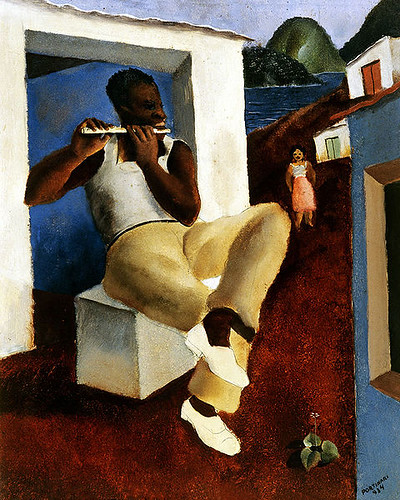
Pintura por Cândido Portinari (domínio público)

 
Most of my students have heard of samba and bossa-nova*... but it is much harder to find those who know what Choro ou Chorinho is. Well, if you are like them, you need no longer miss out on this beautiful style of music.

Choro means 'cry'. It is the noun as in "um choro triste" (a sad cry) (so the first 'o' is pronounced like an 'ô', not like an 'ó'... as opposed to the verb spelled the same way, but pronounced with an ó) ... but the rhythm is most often very happy and upbeat (there seem to be a couple of different ideas on why that is the name, and since I don't know the answer, I won't go it to it). Here is a Brazilian advertisement that makes a joke based on the name of the style, where you can also hear an example of chorinho (don't worry if you don't get the joke!):


Chorinho is considered the first popular urban style of music created in Brazil (originating in the 19th century) and it is stil played in Brazil today.

If you are in New York City,  you can go to a Choro concert right here in the city! The Choro Ensemble is playing at Zinc Bar tomorrow night (04 de Agosto)!

To learn a little bit more about chorinho, read one of these articles:
To learn about the instruments used in chorinho, see my other post with a vocabulary lesson about musical instruments in Portuguese.

To enjoy the music (and hear a little bit of Portuguese), you can watch the documentary "The sound of Rio: Brasileirinho"(imdb). If you are an advanced student, it may be good listening practice. You may try it even if you are a beginner, as there is a lot of music and not too much talking anyway:


*If you are an upper-intermediate or advanced student and really love Bossa nova, you should check this book out!

Hope to see you at Zinc bar!

Vocabulary lesson: Instrumentos Musicais em Português

Bom dia! I was preparing a post about chorinho and thought that it would be a good idea to introduce you to the vocabulary of musical instruments in Portuguese first.  I also have a couple of very nice students who are musicians who may find this useful.

If you are a beginner, don't worry too much if you don't understand a lot of the words in the readings and video, just get as much as you can. If you are an intermediate student, this may be perfect for you. If you are an advanced speaker of Portuguese, you may still learn a new word or two... and I follow the links to some readings that are more advanced.

Parte I: Os Instrumentos Musicais

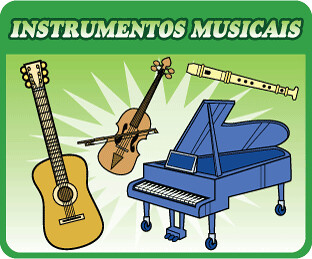
Aqui estão alguns instrumentos músicais:

 
 violão, violino, piano e flauta

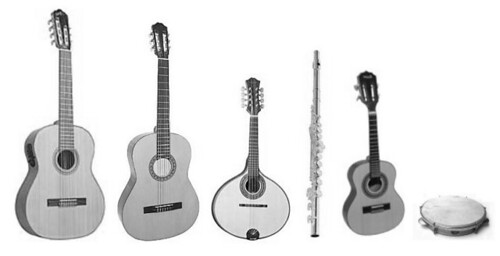
Esses intrumentos são parecidos (similares), mas são diferentes:


Note que a guitarra é elétrica e o violão geralmente é acústico. O cavaquinho é bem pequenininho.

Aqui estão outros instrumentos:

trombone                       saxofone                       clarineta


                                     gaita

bateria

 
                 pandeiro                                                                                 sanfona


O pandeiro é muito importante no samba e a sanfona é muito importante no forró.
O Slash (dos Guns and Roses) toca guitarra e o João Gilberto toca violão.
Você sabia que o Woody Allen toca clarineta?


Atividades:
Responda as perguntas (answer whichever ones you can):
a. Você toca algum instrumento musical?
b. Você tem algum instrumento musical?
c. Qual é o seu instrumento favorito?
d. Qual dos instrumentos acima é maior (mais pesado)?
e. Qual dos instrumentos acima é menor (mais leve)?
f. Qual instrumento o Kenny G. toca?
g. Dê o nome de um instrumento que é importante no samba.
h. Dê o nome de um instrumento que é importante no jazz.
i. Dê o nome de um instrumento que é importante no rock.
j. Dê o nome de um instrumento que é importante na bossa nova.

Jogue esse jogo sobre instrumentos. Fale o nome dos instrumentos em voz alta.

Opcional: leia esse artigo sobre instrumentos importantes na música brasileira (if you can, don't worry if don't understand everything. Beginners may just read the name of the instruments matched with the drawings) .

Desafio (challenge): play a game of forca (hangman), where all words are instrumentos músicais. (Don't worry if you don't know all of the words in the game: I and a lot of Brazilians wouldn't know all those words ourselves!)


PARTE II: Os instrumentos do Choro

Essa parte é sobre os instrumentos importantes no choro. Para saber um pouco sobre o choro, veja as links no meu artigo sobre o choro.

Atividades:

Leia o artigo Os instrumentos do choro (if you can, don't worry if don't understand everything. Beginners may just read the name of the instruments matched with the drawings).

Advanced students: leia este artigo.

Conecte o nome do instrument com a foto:

Exemplo:
Violão de seis cordas: _1__

cavaquinho: ___
bandolim:___
violão:___
flauta: ___
pandeiro ___


O seguinte vídeo sobre um instrumento importante no choro, no samba e no pagode. Adivinha qual é o instrumento!

Aqui está o vídeo, com perguntas para responder (the host of the quiz doesn't support Portuguese characters, so there are no acentos in the quiz :-( ). Click here to see the complete test.


(If you are a my student in a class or private lessons, ask me for a code to share your results or grab it from our private wiki).

Gente! O Eduardo Sant'Anna não é incrível?

Opcional: leia as partes do violão e escute o vídeo de novo. Você consegue reconhecer alguma parte?


 Now that you know the names of the instruments used in chorinho,  enjoy some of the music!

July 1, 2010

Brazilian Music at MoMA Nights thoughtout July

One more for those of your learning Portuguese in NYC: MoMA Nights will be featuring a bunch of Brazilian artists this month! The events are being kicked off right now (as in the time of writing) by the awesome Nation Beat (I only heard about it now and have to head off to teach :-() and will continue through to the end of July. You can see the events scheduled here.

June 7, 2010

Brazilian Film Festival in NYC

Portuguese students and Brazilianites of NYC, this week, you have a chance to watch a bunch of Brazilian movies at a Brazilian Film festival! It is going on right now and it only lasts until Saturday:

http://www.brazilianfilmfestival.com/ny_programacao.html

Such a shame I am going to be away! Otherwise I'll do a field trip with my students for sure...

Enjoy!

February 24, 2010

Sing Happy Birthday in Portuguese again... this time with the help of a cuuuuuute dog!

After seeing my post on singing happy birthday in Portuguese, the owner of a gorgeous golden retriever contacted me for help on the song. They wanted to send a video of happy birthday to the puppy's cousin in São Paulo in Portuguese! (Isn't it fun to be a blogger? How else would I get fun messages like these! ).

Unfortunately, I was away and that e-mail address was a little messed up, so I didn't see the note until it was too late... but it looks like they didn't need me anyway! Here is Golden dog's productions awesome video:


Or you can see it on their You Tube channel, here. (thanks for the video, Simon and Simon's owner!)

February 10, 2010

Type Portuguese Accents on the got with Easy Online Editor

I have a previous post on how to type Portuguese accents on a Mac or Windows with a Brazilian keyboard (if you are going there make sure to read the comments from very helpful readers)... but say you are not using your own computer (or not coordinated enough to type those alt combos) and you just want to type a quick couple of sentences, with all those lovely accents... You can use a simple online editor like this one.

As Tomasz Szynalski, the creator of the utility, put it on an e-mail he sent me, "[t]he idea is to spare users the pain of installing and switching keyboard layouts, memorizing Alt-codes, etc. Some people use it to quickly type a short piece of text (like a Portuguese name or address), others use it to write personal or business letters to Portuguese speakers."

Enjoy!

July 9, 2009

80's-90's Brazilian Rock Concert!

Ok, so I was planning to have a language/ non-event post next... but then I just found out about what looks like a very fun event for me and all NYC Portuguese students out there coming up this Saturday... so I had to post it!

It seems like this group is a very casual, non-pro group of Wall street Brazilian guys who decided to play gigs for fun... their wives are the back vocals and the a crowd is full of their friends.... sounds like an awesome garage band kind of vibe.

One very cool thing is that they play classic 80's-90's that most Brazilians the same age as your Portuguese teacher here just love.... All those who know me know that I love samba, bossa/ brazilian jazz and forró, but you can usually find that more easily (ainda bem!)... a band playing the fun 80's stuff is much harder to find! (Don't you love New York City?). So if you are really getting into the culture, this could be a great cultural experience (even if you end up finding out that it is not really your bossa-nova-ear's thing).

The concert is this Saturday at Sullivan Hall at 9:30 pm. Tickets are $10 and can be purchased in advance here. They say to arrive early because they are opening for another band (Shitty Shitty Jam Band, doesn't that sound like a night!).

For those advanced Portuguese learners, you can listen to this video about the band and see what you understand (I may post supporting learning notes/glossary later):


I am going and trying to drag some of my local students with me. Hope to see you there!

April 26, 2009

5 Tips to Remember a New Word in Portuguese

You have just learnt a new word that you really want to remember how to say it later... How do you make sure you don't forget it? Here are some tips to remember a new word you particularly care about. (It may be useful to pick a new word and really practice this things as an example).

1. Say the word out loud. You've heard the new word from your teacher, or read it somewhere and you understood its meaning... you may write it down and you are done. This step is makes sense and is very simple, but it is sometimes forgotten. Take a couple of seconds to repeat the word. Make sure you are comfortable pronouncing it. Then cover the word (if it is written) for a couple of seconds and see if you can remember it without looking (repeat until you can say it, at least just a couple of seconds after covering it up). See if you can say the word out lout after a few minutes have past.

2. Put the word into context (1): make a sentence. The very next thing would be to make up a sentence (or several). To focus on your new word, good sentences would be mostly formed of other words you already know (plus the new word). You can get started with any old sentence, but as you go own, try to make the sentences as realistic and as relevant to you as possible. Say you learnt the word avô (grandfather), then make a sentence about your own real grandfather (e.g.: O meu avô mora em Nova Iorque. or O nome do meu avô é John Smith.).

3. Put the word into context (2): visualize. You can try visualize the word by itself as you say it, but also think of the sentences you made in the previous point (you are more likely to use the word in a sentence than by itself later). You may visualize the meaning of the sentence, but, most importantly, imagine a context when you would actually say the sentence. For example, you may imagine the following for the word avô:

A: - Mary, esse é o meu avô, John Smith.
[Imagine the whole situation, introducing your grandpa to a real friend]

A: - Eu moro na California, mas eu sou de Nova Iorque.
B: - Que legal! O meu avô mora em Nova Iorque.

A: - Que lindo bebê! Qual é o nome dele?
B: - John Smith.
A: - Ah! O nome do meu avô é John Smith!

4. Put the word into context (3): use stickers. This is an old trick, but it is good. Say you want to remember the word for refrigerator (geladeira in Portuguese). Stick the word geladeira to your fridge, then every time you get close enough to your geladeira you will be reminded of the word. ... Sure, your avô would probably not like it if you put a sticker on him, but you may get away with placing one on a picture of him.

5. Use it! The more you use a word the more you will remember it, so make sue to get as much practice speaking Portuguese as possible! The more you speak, the more likely it is that you will end up having a chance to use your word.

[Note: You may not do this for every new word you hear... just a few that you really want to or may be having trouble remembering].

July 18, 2008

Hand gestures in Brazilian Portuguese

Brazilians use a lot of hand gesture when they communicate, so if you are learning Portuguese, those are a great thing to learn too. Here are just a few of many that are frequently used, to get you started:

Thumbs up - you will probably see this a lot in Brazil. It means beleza (nice, literally beauty) or that everything is legal (cool). Some people (usually younger people) greet like this (instead of using Tudo bem):

- Beleza? [Thumbs up]
- Beleza! [Thumbs up]

Ok Gesture: The gesture used to indicate 'ok' in the U.S. (making a circle with your thumb and your index finger) is not commonly used in Brazil, and when it is it is considered by most to be obscene! (something to do with the whole represented by the circle... ). For some people it is offensive only if you face the remaining fingers down, as in turning the ok sign upside down... but for some people even just the plain ok sign is a bad thing. Just avoid it and use the thumbs up instead.

Repeatedly snapping your fingers - that is, snap your thumb to the middle finger, as some people do when dancing or singing: People snap repeatedly (around 3 -4 times) to indicate something taking a long time.

O Marcos mora aqui nos Estados Unidos faz, ó... [snap, snap, snap] muito tempo!
Marcus has lived here in the U.S. for, look... [snap, snap, snap] a long time!

Pseudo-finger snapping - this is very similar to clicking your fingers, but you just stroke your thumb to the middle and index finger instead of snapping them: this is usually means 'expensive' (though I have seen it more rarely to mean money). For example, say a street vendor is offering you something for 10 reais, and you think it should cost 5, you can say no (head shaking for 'yes' or 'no', as well as 'no' done with the index finger is just the same as in English) and do the pseudo-finger clicking to indicate you think it is too expensive.

All fingers together - palm facing up, bring all your fingers together, repeatedly taping four fingers against the thumb: this means 'a lot' or 'full'. For example, a bus driver might make this gesture if you are trying to catch a bus, but he won't let you get on because the bus is too full... Or someone might say:

A festa ontem estava, ó... [All fingers together]: lotada!
The party yesterday was, look... [All fingers together]: full to capacity!

Tap behind your chin - palm facing down, tap right under your jaw, with the back of your hand. This means papo-furado (B.S.), indicating that something is not true.

Clapping the back of a hand against the palm of the other - both palms horizontal, facing up the whole time, clap the back of one hand on the palm of the other and slide it off as if sweaping. Repeat couple of times: This means Não tô nem aí ( 'I don't care at all' or 'I am not all all interested').

For more, you may look at this article with pictures of gestures, here is a great video on Brazilian hand gestures and another with some more examples of gestures and body language (make sure to look at the helpful comments). If you have a Brazilian teacher or a friend, get them to show you these to help you practice.

July 15, 2008

Watch a Movie in Portuguese

A great way to hear the language and experience a view of the culture!

If you are either in New York City or Los Angeles, you can catch regular screenings at the Centro Cultural Brazil (NYC) or at Melnitz at UCLA.

For everyone else, here are some movies that you can get relatively easily in the US (it is as easy as adding it to your Netflix list... a couple of them are at Blockbuster too.):

- Central Station (Central do Brasil)
- Carandiru
- City of God (Cidade de Deus)
- Cidade dos Homens (City of Men)
- The other side of the street (Do outro lado da rua)
- Behind the Sun (Abril despedaçado)
- Four days in September (O que é isso, companheiro?)
- Me You Them (Eu, Tu, Eles)
- Midnight: 2000 Seen By... (O Primeiro Dia)
- God is Brazilian (Deus é Brasileiro)
- Orfeu
- Black Orfeus (Orfeu Negro)
- Possible Loves (Amores Possíveis)
- The man who copied (O homem que copiava)
- Bossa Nova
- Casa de Areia (House of Sand)
- Vidas Secas
- The Middle of the World (O Caminho das Nuvens)
- Bus 174 (Ônibus 174)
- Manda Bala (Send a Bullet)
- Foreign Land (Terra Estrangeira)
- Tieta of Agreste (Tieta do Agreste)
- Moro no Brazil
- The Sound of Rio: Brasilierinho
- Almost Brothers (Quase Dois irmãos)
- Cinema, Aspirins and Vultures (Cinema, Aspirinas e Urubus)
- Saudade do Futuro
- Dona Flor and her Two husbands

This should be able to give you a lot of listening practice...

Happy watching!

Note: I haven't watched many of these yet, so please add a comment if you liked or disliked any of these... or add your own suggestion.

July 12, 2008

Learn by singing: Exercises for "Amanhã eu não vou trabalhar"

I have just posted the words of a música (this is how Brazilians say song) for you to practice your Portuguese by singing. Here are some exercises if you want to turn the song into a complete lesson that you can do without a teacher (note: start here and follow the instructions, then only go to the post after you are done).

Focus of the exercises: listening and practice conjugating verbs in first person (eu)

1. Get the song and open it in a different window.
You can purchase the song from itunes or listen to it from this somewhat strange video.

2. Listen to the song once or a couple times.
Advanced/ upper intermediate students: pay close attention to the words while you listen and then try to summarize what you understood: (a) Did you get a gist for what is the song about? Pretend you are explaining your guess to a friend, in Portuguese. (b) Can you remember any of the verses?

Upper beginners and intermediate learners: pay close attention to the words while you listen. (a) Did you recognize any words? Intermediate students: try to list 10 words you think you recognize and write them down, upper beginners: try for 5 words. (b) Can you guess what the song is about? (it is ok if it is wrong!)

Fresh beginners: Just listen to the song a couple of times and enjoy it. At least once, try and pay close attention to the singing, even if you don't understand (just to help you get used to the sounds of Portuguese). If you are adventurous, you can even try to imitate a little part of the song, just for fun... but don't worry too much.

3. Complete the orange part of the words below.
Feel free to skip this part if you are a fresh beginner and you don't know much about verbs yet. Just follow the conjugation instructions and fill in the orange blanks in a separate page or a print out of this post. (For example, if you see: Eu _________ [falar, eu, presente] Português. You write: falo in the blank space.)

Amanhã eu não vou trabalhar
_________ [Ficar - eu, pretérito perfeito] até tarde no samba
Não
________[poder - eu, presente] negar
E eu não _______[saber - eu, presente] o que eu vou _________
Só sei que ______________________
________[acordar - eu, presente] às cinco da manhã
e
_________[sair - eu, presente] sozinho
_________[Levantar, eu presente] antes mesmo do sol levantar
Demoro uma vida pra ____________

Começa o meu expediente, não boto uma fé

_________ [Tomar - eu/presente] um litro de ________
Pra ver se eu
__________[esquecer - eu, presente]
que a minha ________ já tá pra estourar

Eu ________[perder - eu/presente] o emprego,
mas sei que Amanhã eu não vou trabalhar

Amanhã eu não vou...

O samba tá bom demais

Pra ir embora, como é que faz

O chopp descendo, o couro comendo
E aquela nega não para de _____________

__________ pra mim
E a loura __________ que sim

___________ [se apaixonar, eu, preterito perfeito] mais de três vezes
Desde o começo da noite pra cá

Eu perco o juízo, e
________[dizer - eu, presente]:
Amanhã eu não vou trabalhar
.

Optional: you may now listen to the song again, paying attention to the parts you have completed.

3. Complete the remaining (green) blank spaces of the words above.
Upper beginners to advanced students: now listen to the song again. This time you want to fill out the green spaces. Don't worry if you don't get all of them.

4. See the full lyrics.

Check the full lyrics for the song here.

Optional exercises (if you haven't had enough already! :-))

Intermediate: (a) Can you summarize what the song is about now? (b) Find one or a couple of new words that you didn't know before and see if you can guess their meaning from context.

Advanced: (a) Have you had any experiences similar to the one described in this song? How was it? How would you tell a friend about that experience (in Portuguese).Did you learn a little Portuguese from the exercise? Good job! Now you can sing along in Portuguese!If you still want more, you can see a rough translation and some notes in this next post.

Well done! Now, you can see a rough translation of the song with notes on this post.

Learn by singing: "Amanhã eu não vou trabalhar"

Music can be a great tool to help you learn (see a short post in Portuguese, here): it can build up your vocabulary, it is fun and the rhythm may help you better remember what you learn. Here is a song for you to get started: "Amanhã eu não vou trabalhar", by Alexandre Grooves, with Seu Jorge. You can get it from itunes, msn music or listen to it from video.

[Note: if you want to make the most of this song by doing some exercises, go through this post before reading on]

Listen to the song and see the words for the song here. Here a free translation with some notes:

Amanhã eu não vou trabalhar Tomorrow I am not going to work
Fiquei até tarde no samba I stayed until late at the samba
Não posso negar I can't deny it
E eu não sei o que eu vou inventar I don't know what I am going to make up
Só sei que amanhã eu não vou trabalhar I just know that tomorrow I am not going to work
Acordo às cinco da manhã e saio sozinho I wake up at five in the morning and go out alone
Levanto antes mesmo do sol levantar I get up even before the sun rises
Demoro uma vida pra chegar I take a life[time] to arrive
Começa o meu expediente, não boto uma fé My work hours start, I can't believe it/ I have no faith on it
Tomo um litro de café I take a liter of coffee
Pra ver se eu esqueço que a minha cabeça já tá pra estourar To see if I forget that my head is already about to explode
Eu perco o emprego, I lose my job,
mas sei que amanhã eu não vou trabalhar but I know that tomorrow I am not going to work

O samba tá bom demais The samba is really good
Pra ir embora, como é que faz How can one do to leave?
O chopp descendo, o couro comendo The beer (draft beer) going down, the action going down*
E aquela nega não para de sambar and that girl/ black girl doesn't stop dancing samba
Olhando pra mim Looking at me
E a loura dizendo que sim and the blond saying yes
Já me apaixonei mais de três vezes I've already fallen in love more than three times
Desde o começo da noite pra cá Since the begining of the night until here
Eu perco o juízo, e digo: I lose my mind, and I say:
Amanhã eu não vou trabalhar. Tomorrow I am not going to work.

Expressions:
  • botar fé: literally, to put faith. It is a slang, popular with hip youngster, that means to believe in or have faith in something and somebody, e.g.: Boto fé que a Marina vai acabar ficando com o Alexandre. (I believe that Marina will end up hooking up with Alexandre)
  • Chopp: draft beer.
  • O couro comendo: I think the best translation, meaning wise, would be "the shit is going down", though in the Portuguese expression has no bad words in it.
  • nega: this slang term means black girl or woman, but it is also used to refer to women of any skin color as an endearment term (like honey or sweety).
  • perder o juízo: to lose one's mind.
Now see if you can sing along!

July 8, 2008

Typing Portuguese Accents (Keyboard shortcuts)

Are you ready to get serious and start typing accents? Not only will your accented text look somewhat cool, but you will also be able to type correct Portuguese and get some important distinctions, like the difference between avô (grandfather) and avó (grandmother)... or coco and cocô !*

On a Mac, it is very easy to type accents, even without any configuration (setting up a keyboard etc.) necessary. You just have to remember the 5 combinations below (press keys in the square brackets at the same time and then type a vowel):

[Option n] = tilde (til) e.g.: não
[Option `] = grave accent (crase) e.g. Fui à escola. (I went to the school)
[Option e] = acute (acento agudo) e.g.: café
[Option i] = circumflex (acento circunflexo) e.g.: você
[Option c] = cedilla (cê cedilha) e.g. força (strength)

These should work with all applications, including word and browsers in Internet Cafes, and you should remember them in no time if you use them (it works for me! ˆ´˜ç :-)).

On Windows, unfortunately it is harder to just use the immediately available shortcuts. This is because they have separate codes for each combination of vowel, case and accent, so there are more codes to type and remember... but here are the codes anyway (press the Alt Key at the same as the codes below on the number keypad only):

á 0225, Á 0193, à 0224, À 0192, â 0226, Â 0194, ã 0227, Ã 0195
é 0233, É 0201, ê 0234, Ê 0202
í 0237, Í 0205
ó 0243, Ó 0211, õ 0245, Õ 0213, ô 0244, Ô 0212
ú 0250, Ú 0218
ç 0231, Ç 0199

... So Windows users usually set up an international or Brazilian Keyboard first, which you can quickly learn how to do here (Brazilian), here or here (International)**. Once an international keyboard is set up, the key combinations become easy and more intutitive (press keys in square brackets at the same time, followed by a vowel):

[Shift ~] = tilde (til)
[`] = grave accent (crase)
[' ](apostrophe) = acute (acento agudo)
[Shift ^] = circumflex (acento circunflexo)
[RightAlt c] = cedilla (cê cedilha)

Want to try it out? Leave a comment with accents!

*Digresssion for advanced learners only... you may be entertained by these discussions on Brazilians confused by these words.
** For setting up a Brazilian keyboard on a Mac, see this page.

June 28, 2008

Practice Portuguese with Some Great Videos

The University of Texas has made available some excellent videos for Portuguese exercises. The videos show little snipets of Portuguese speakers discussing various topics, covering all levels. Here are some suggestions of how you may use them:
  1. Choose a video according to your level. Don't expect to understand everything, especially if you are a beginner. (If you have just started, they may be a little too hard... you can try some of the resources here for a while first).
  2. Watch the video a couple of times, without reading the transcription.
  3. Quickly summarize what you understood, in Portuguese if possible (say it out loud, if you can or just in your mind if you are in public and that is too embarrassing).
  4. Listen to the video again, this time reading the transcription at the same time.
  5. If you understand most of the main ideas of the video, now pay attention to some of the words that you didn't understand. Look up some of them in a dictionary, or ask your Portuguese teacher.
This is a great thing to do every once in a while between lessons to imrpove your comprehension and vocabulary.

Divirta-se!